Peer Interaction
Described by Carolina Carvalho, based on O'Donoghue, M. et al. (2025)Description
Alternative Peer Interaction Supports
Context
Description
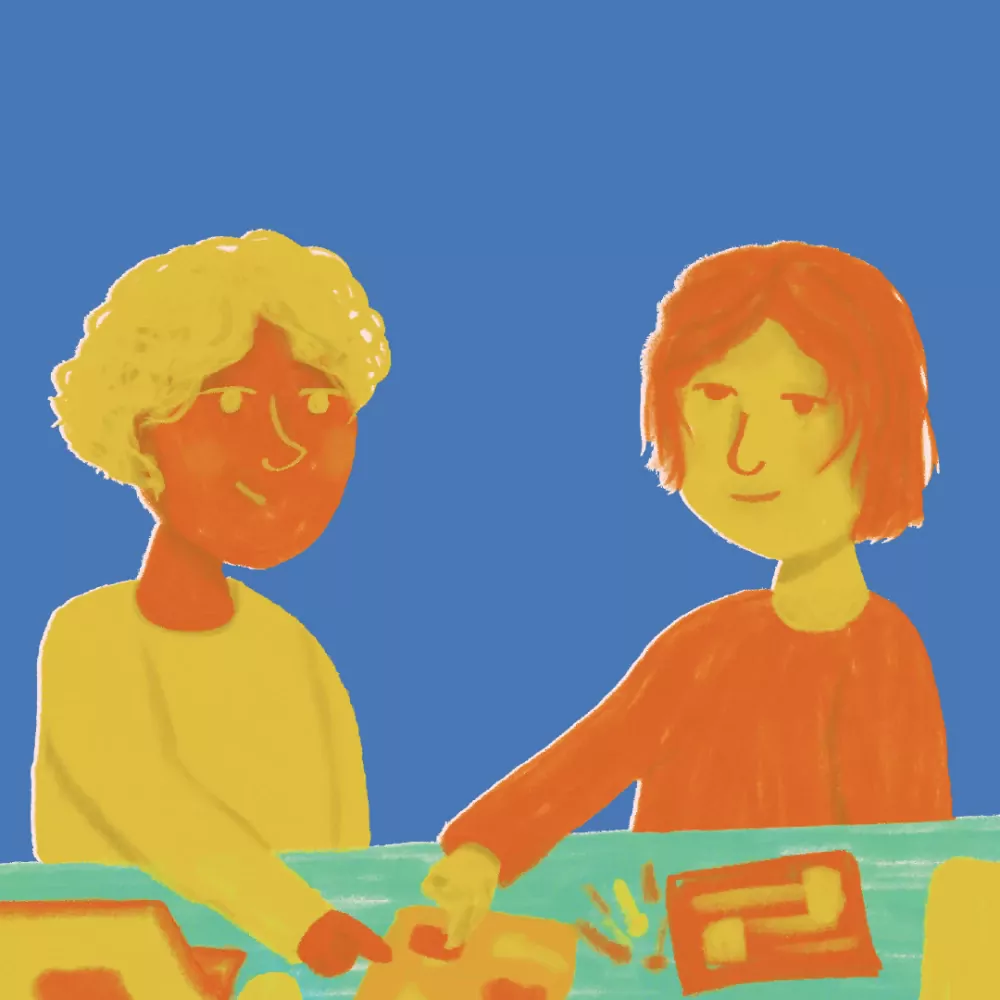
Collaboration is established with Autistic individuals to better define what supports are needed and useful, avoiding research and implementation of practices based on assumptions or neurotypical requirements. Supports are put in place, taking into account different forms of communication, interaction, as well as the Double Empathy Problem - the understanding that both neurotypical and neurodivergent groups may struggle to empathise with each other because of their different lived experiences.
Alternative Peer Interaction Supports also acknowledge that, often, Autistic groups have better understandings of non-autistic interactions than the other way around, due to recurrent disabling environments. Therefore, it is encouraged to “tip the scale toward change in the environment” (O’Donoghue et al., 2025), with non-autistic peers or facilitators getting access to added training.
Engagement with more-than-human entities
Alternative Peer Interaction Supports encourage the consideration over inclusive environments that are not disabling to those accessing supports. Therefore, there is a strong component of architecture of the space that should be neuro-affirming, taking into account sensory needs.
Interpretation as “retracing”
Case study
Reference
O'Donoghue, M. et al. (2025). Using the Double Empathy Problem to Reframe Supports for Peer Interaction. D. Milton (e.d.) The Double Empathy Reader. Pavilion Publishing and Media Ltd. ISBN: 9781803882956
Links