Energy Model-Maker
Described by Asli Kolbas (author of the practice), based on Palmieri et al (2021)Description
Context
The Energy-model maker is designed to collaborate with youth and was first introduced in the ReWorlding project in the Youth Centre, GIGOS Nieuwe Kempen.
Description
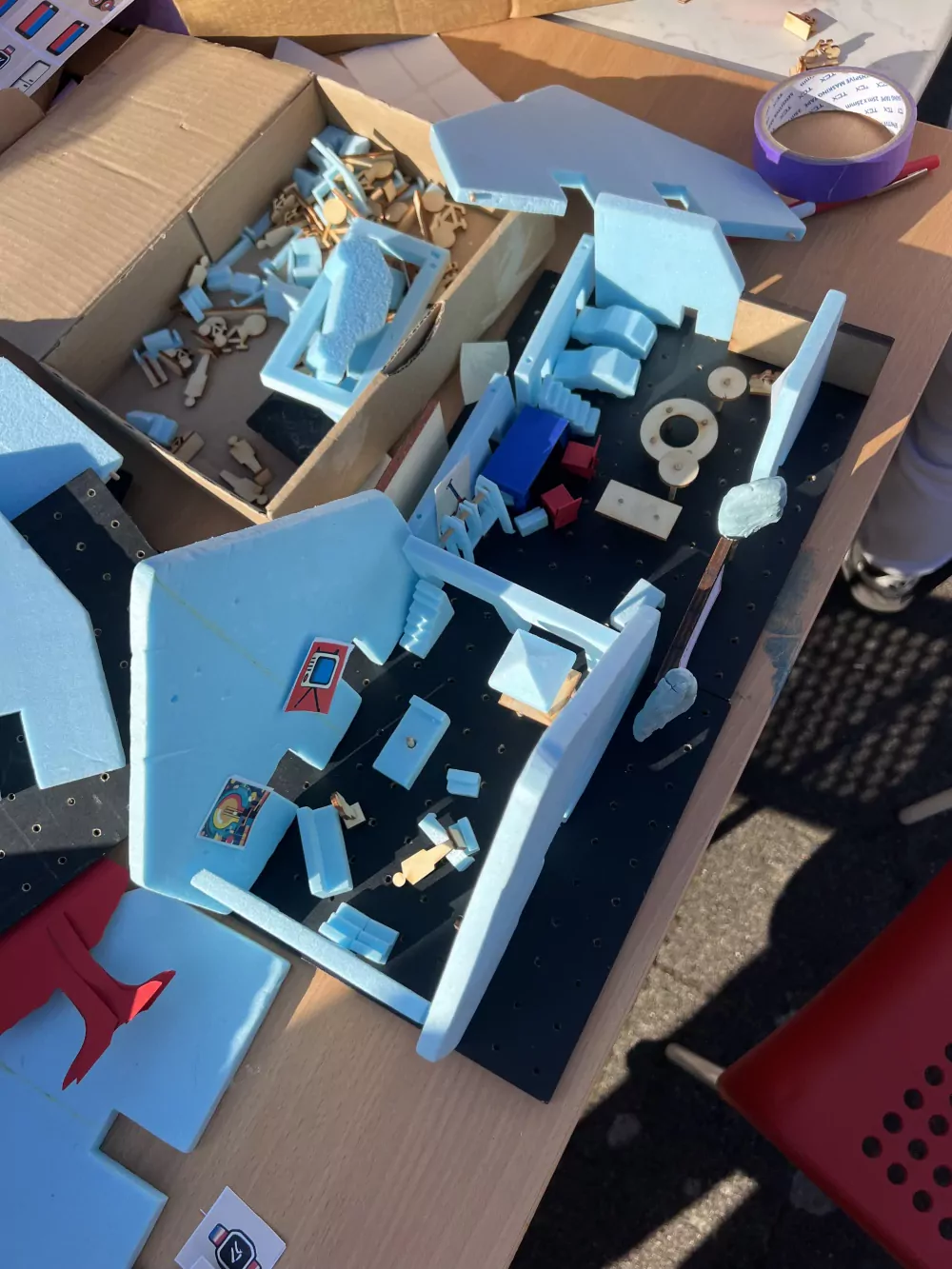
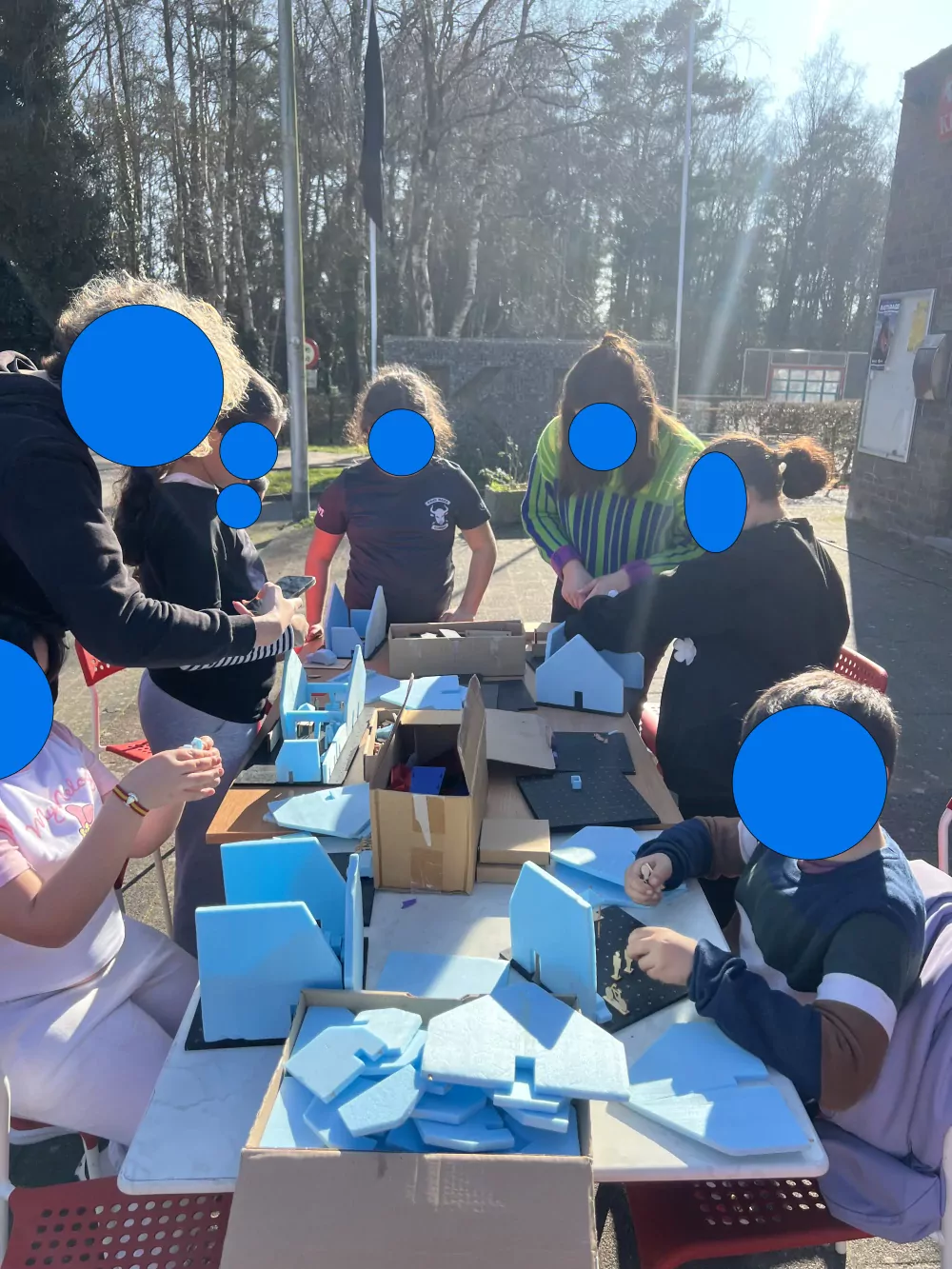
In combination with the Energy Detective Notebook, an existing model-making game was made, based on the previous pattern language toolbox by Teresa Palmieri. Youth were encouraged to build models of their homes and use stickers from Energy Detective Notebook to depict energy usage. This tactile and visual method fostered conversation around the neighbourhood and felt empowering for youth, aligning with observations that such activities build trust and underscore the importance of being together.
The game starts with asking them to build their homes. They are free to choose the model props that were given. Later, they are asked to show where or how they use energy and to map them with the stickers. They are then occasionally triggered to debate using fictional scenarios.
An example fictional scenario involves a parent receiving “brieven” (letters) on energy that were hard to decipher, and created confusion (“You don’t understand that? What is that? What should I do?”).
Engagement with more-than-human entities
The physical model-making props, stickers, and tactile materials act as mediating entities that shape how youth understand and represent energy flows in their homes. Energy itself becomes a character in the scenarios; something that moves through homes, creates bills/letters, and generates confusion for parents. The homes-as-models create a scaled relationship where youth engage with architectural and infrastructural systems as active participants in energy consumption.
Interpretation as “retracing”
The tactile model-building reveals how spatial, physical engagement can surface knowledge that might remain hidden in traditional interviews or surveys. Youth demonstrate understanding through building and placement rather than just verbal articulation.
The improvised fictional scenarios (like the confusing energy letters) create safe spaces for exploring real anxieties and knowledge gaps. This suggests that research can benefit from creating fictional but relatable situations that allow participants to explore complex issues without personal exposure.
The activity shows how participants can simultaneously engage with immediate tasks (building models) while processing larger systemic issues (neighborhood governance, energy justice). This suggests research methods should allow for multiple scales of engagement.
For instance, S.’s declaration about wanting to be governor emerged organically from the play context, suggesting that creative methods can reveal aspirations and political consciousness that structured interviews might miss.
S. told us she was going to study during the break because she wants to be the governor of Genk one day. Although the game was not really related to the topic of energy and sustainability at that point, we could reflect on the neighbourhood level and it was inspiring to see the ambition and joy of being engaged with the surrounding through the play experiments.
The discussions around being mediators for energy paperwork reveal how energy literacy is distributed across social networks - valuable data about how communities actually navigate complex systems.
Is there a toolbox in development?
Physical components:
- Model-making materials/props for constructing home representations
- Energy mapping stickers (carried over from the Energy Detective Notebook)
- Prompt cards (like "Help with paperwork") that introduce scenario-based discussions
Process elements:
- Sequential game structure: Home building → energy mapping → scenario triggers
- Debate/discussion facilitation methods using the models as conversation anchors
Methodological insights:
- Pattern language integration (building on Teresa Palmieri's work) suggesting systematic approaches to spatial representation
- Trust-building protocols that recognize the social/relational foundation needed for meaningful participation
- Empowerment assessment indicators that track how tactile/visual methods affect participant agency
References
Palmieri, T., Huybrechts, L., & Devisch, O. (2021). Co-producing, curating and reconfiguring dwelling patterns: A design anthropological approach for sustainable dwelling futures in residential suburbs. Design Studies, 74, 101011. https://doi.org/10.1016/j.destud.2021.101011
Links
-converted.webp)