Seed exchange
Described by Júlia Tena MensaDescription
Description
Seed exchanges are organised events where producers would bring their collected seeds to be exchanged with other producers’ seeds and also attendees. These events were focused on the seed, but the seed was the material aspect of a wide range of elements being exchanged. Producers and other attendees would share questions, knowledge, concerns and discussions about the plant, the fruit and the environment. In this way, during events of seed exchange, there were built relationships to co-learn among all the different actors.
Engagement with more-than-human entities
Even though the seed was only one of the aspects being exchanged in these events, it is interesting how it is a seed, a more-than-human entity, encompasses different elements present in agroecological discourses.
The seeds are one of the points of a circular process of plant reproduction: from the seed, the plant grows and eventually produces the fruits which will contain the next seeds. Nonetheless, it brings a special importance since it is where the process ends and starts again. In this specific moment, humans and more than human knowledge are kept and created inside and outside the seed, with the genetic information of the plant, and the human information on how to make it grow. These knowledges enhance the production and reproduction of the seed over again, but also the knowledges and the food.
It is for this reason that events focused on the seed manage to move many different actors, from producers to agroecological enthusiasts.
Interpretation as “retracing”
Seed exchanges were useful in understanding how the alternative food network expands on agroecological fields to issues broader than food or production. In other words, seed exchanges allow the researcher to further understand the other issues related to the local knowledge and the seeds. Even though they are not my focus, these are the points where production and farm labour start.
Re-tracing in this case was related to expanding the view of the topic of research directly related to organic food production.
Case study
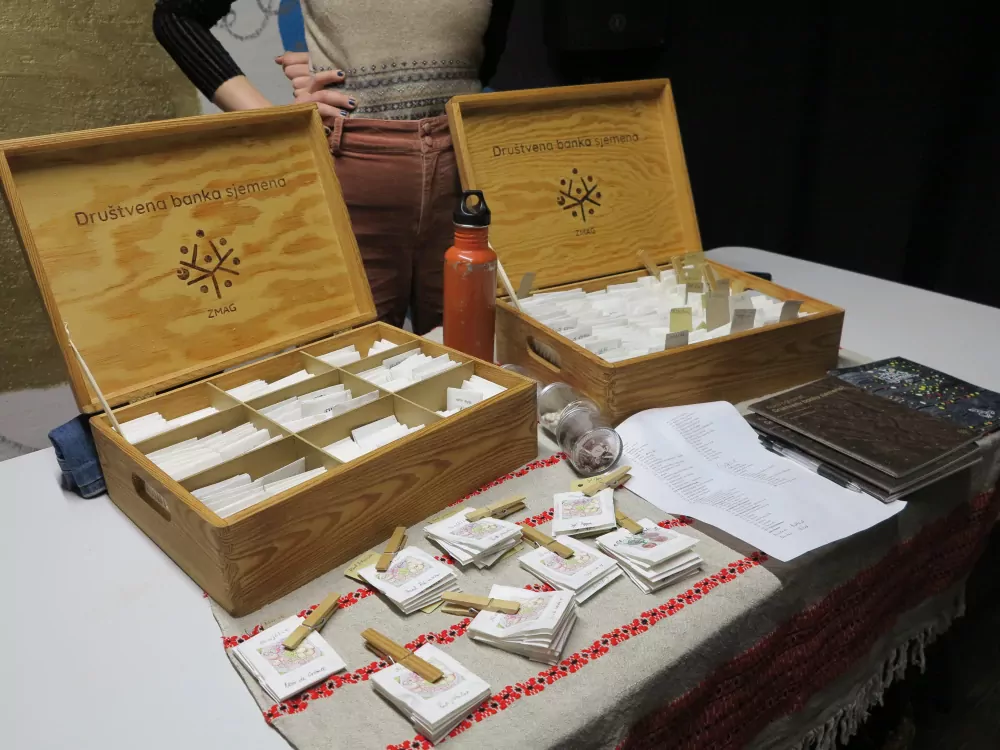
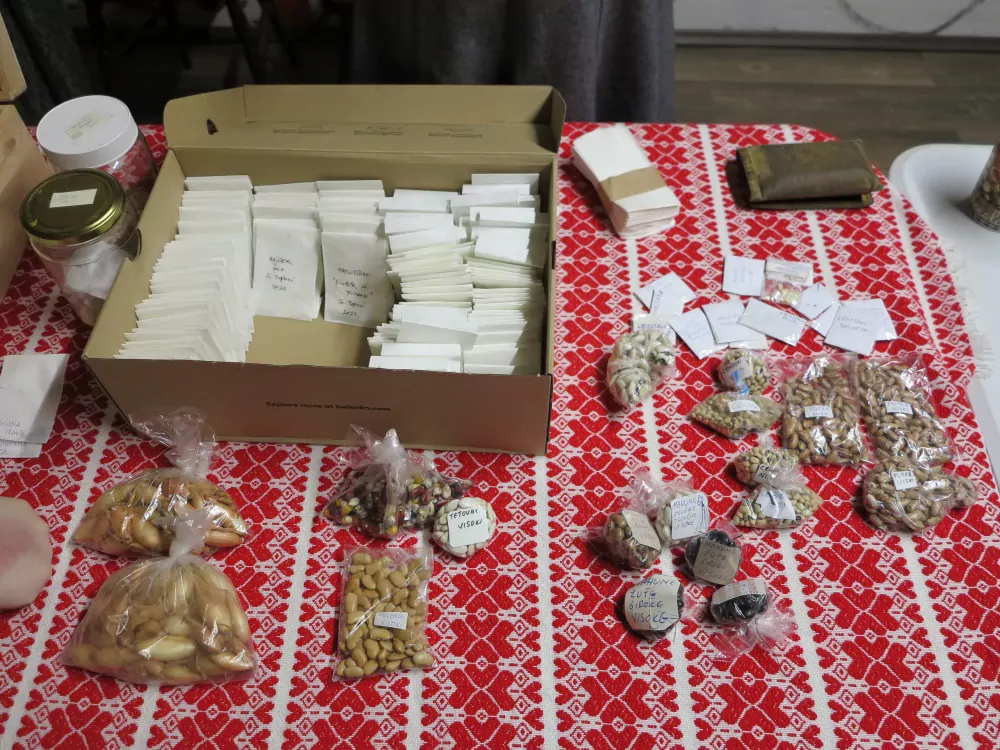
The seed exchange was experienced in the ReWorlding project, at Vestigium Udruga, a civil society organisation based in Zagreb. In their effort to sustain an alternative food system in the capital, they organise farmers’ markets every Saturday and, regularly, seed exchanges.
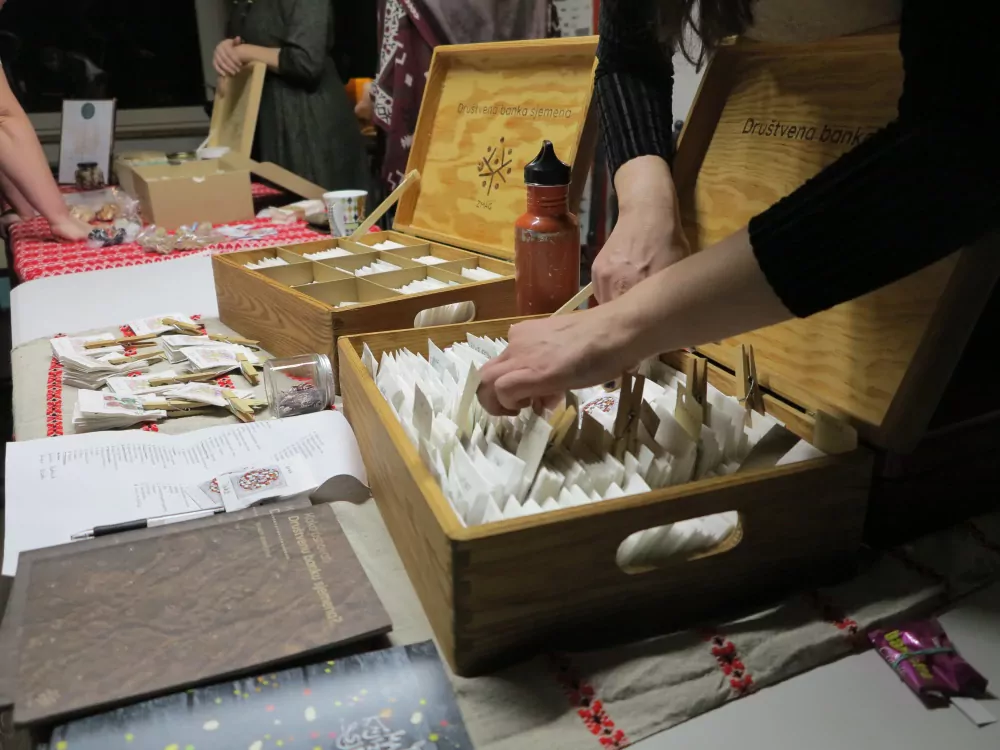
It was early spring, and the time to plan summer vegetables was around the corner. A perfect moment to celebrate diversity, knowledge, and practices shared among seed collectors, farmers, and attendees. The attendees varied from curious passersby and experienced gardeners waiting for summer crops. The day unfolded filled with conversations about growing techniques, shared advice, and thoughtful questions. Friends reunited, and new connections began to form.
While attendees explored the seeds, asked their doubts, and learned from one another, seed collectors and farmers had the opportunity to connect, both with each other and with the wider community, sharing their knowledge, stories, and practices.aspect of these groups. They set up groups based on observation of the participants and how different individuals could match each other’s interests, to develop friendships and social skills.
Links