Culture Companion
Described by Anannya Bhowmik (based on work from International House North Denmark (Luisa Geitmann-Mügge))Description
Context
Culture Companion is a programme that brings together local residents, internationals, and employees of the International House North Denmark (IHND) in Aalborg. It runs twice a year, from April to August and from October to February, with each cycle lasting about four months. Participants are encouraged to meet every two months, complemented by spontaneous informal gatherings. Activities take place both at the International House North Denmark (Aalborg Kommune) and in various recreational spaces across the city, creating opportunities to explore Aalborg and strengthen local connections.
Description
International House North Denmark organises Culture Companion to build bridges between newly arrived internationals and the local community. This practice has been shaped by the people working for International House North Denmark, Aalborg Kommune for several years, through continuous feedback and citizen involvement. One of the earliest versions of this programme was called “Expat Host”.
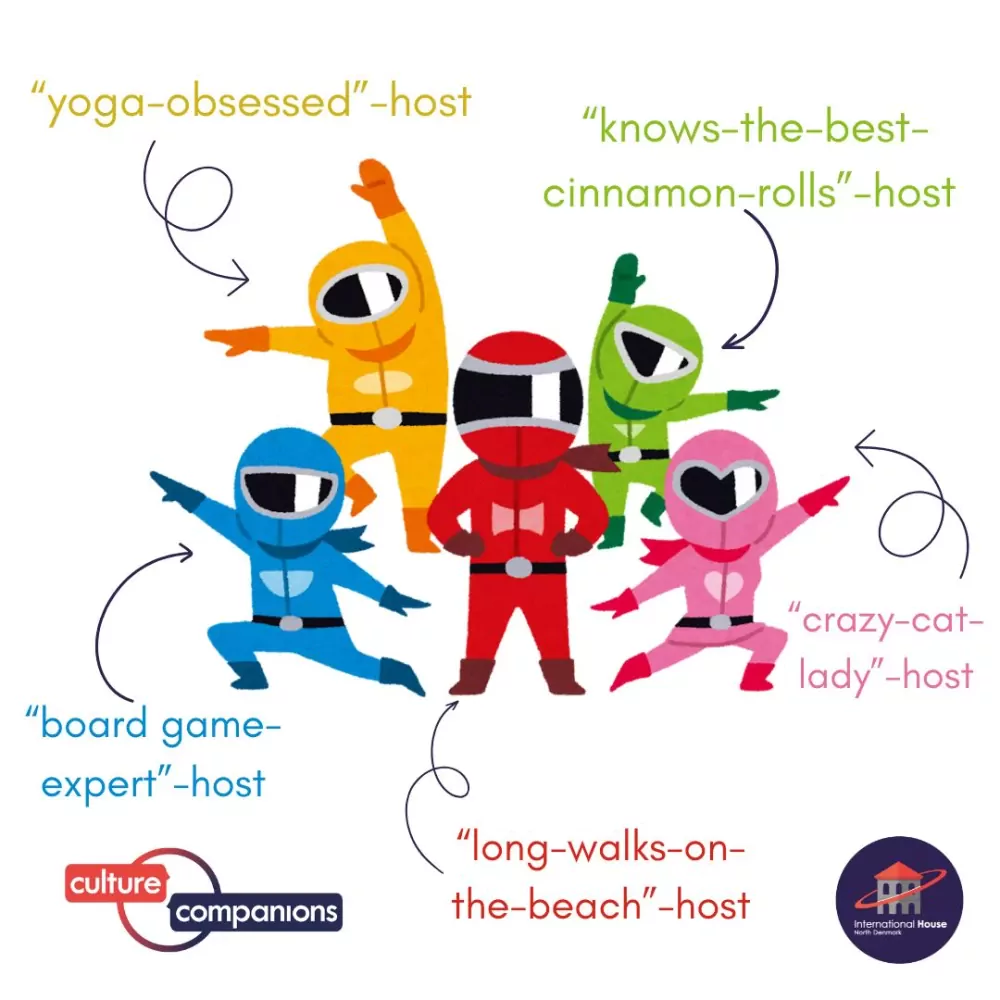
In this practice, citizens sign up voluntarily to meet. People who have been living in this city take up the role of a “Mentor” or “Host”; who can be Danish or International. IHND matches them in pair; keeping in mind the diversity angle, catering to the needs of new connections. For example: a newly arrived Italian won’t be matched with an Italian resident living in Aalborg, or a person working at university won’t be matched with somebody working at the same place. In general, the matching aims to achieve a balance between diversity and similarity, allowing for the participants - both mentees and mentors- to discover new perspectives while also being able to relatively easily connect with their match due to similar interests and/or expectations from the programme.
IHND sets up the foreground of this relationship by facilitating group meetups (or common activities) and encouraging the participants to define their own terms. There are few ground rules defined to respect the choice and privacy of both parties. The facilitator also provides “probes” for introductions and activities.
The program structure:
• The host and mentee meet once per month (or more often)
• IHND organizes several common activities,
• IHND checks in with each participant individually via the half-way check-in, performed in early December or early June.
• The cohort’s experience is evaluated through a questionnaire in February/August, to improve the experience for the upcoming one
Although there’s no direct mention of Participatory Design, the processes followed by IHND are in sync with the ethos of Participatory Design practices. Facilitators of this practice are continuously reflecting upon and shaping it throughout the years. For instance: in the earlier version of Culture Companion known as “Expat Host”, interested hosts and mentees could sign up through out the year and were matched as soon as a suitable host/mentee had signed up. However, this caused long wait times and loss of participants. Hence, a cohort based approach was implemented.
Engagement with more-than-human entities
This practice can inspire creating connections with the more-than-human world. For example, by bringing a new plant to our garden, we engage in a reflective process of familiarising ourselves with the plant and its needs. The instructions about the plant care serve as a “probe” to us.
This practice can be extended further when we humans enter into the world dominated by the more-than-human entities, such as a jungle. We can draw from the facilitation role of IHND, who has awareness about both the worldviews: local & international. Similarly, tribal or indigenous community knowledge can be leveraged to form connections to the more-than-human world.
Interpretation as “retracing”
Culture Companion begins by acknowledging the diverse lived experiences of newcomers and long-term residents. The matching process avoids cultural or professional redundancy, which reflects a critical tracing of social infrastructures and interdependencies. It surfaces local knowledge about integration, belonging, and cultural navigation, making visible the socio-cultural dynamics of Aalborg.
As part of the project ReWorlding, the researcher participated in this activity to gather knowledge about the international residents of Aalborg and their way of making sense of this city. By observing the interactions, as a PD researcher, the researcher gained the situated knowledge of the problem area i.e. “unemployment” and “social inclusion”.
Case study
During the researcher’s secondment at IHND, they participated in this programme both as a newly arrived immigrant and as a participatory design researcher, observing how people can be brought together around a common goal. The first Culture companion session is always conducted as a group meeting by an IHND facilitator, who sets the tone with a short introduction followed by engaging ice-breaking exercises.
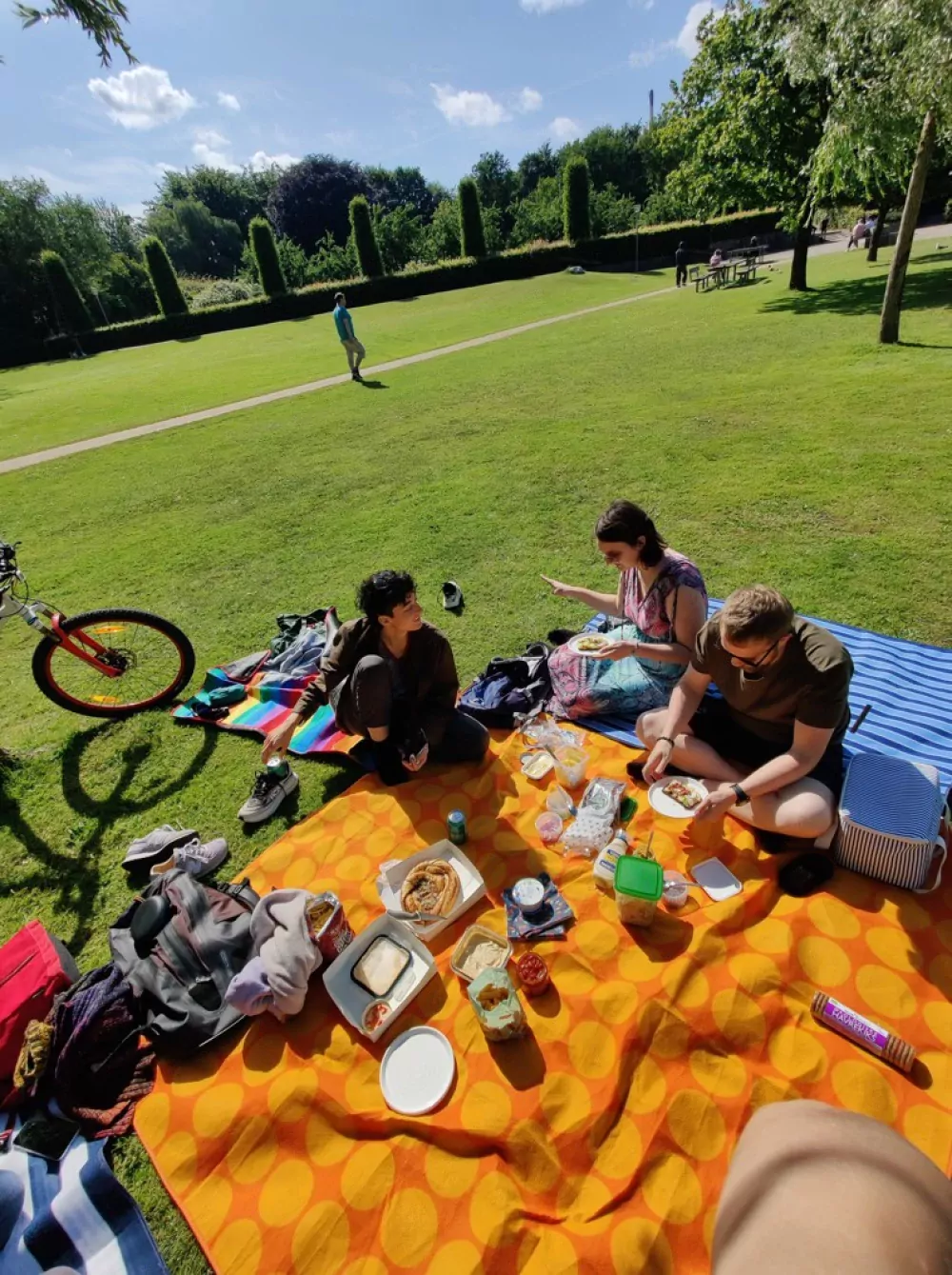
The facilitation is open and welcoming, allowing organic group formation and conversation. During these sessions, the researcher observed participants sharing experiences and finding commonalities despite differing life experiences. Participants were generous and respectful, embracing each other’s worldviews and creating a supportive environment.
Is there a toolbox in development?
Building on these observations, a workshop activity called “What’s in your box” was developed as a toolbox element. Inspired by the ways in which shared experiences can form bonds within a community, this activity helps participants get to know one another and uncover common threads that can strengthen group cohesion.
References
Aalborg University. (n.d.) Apply for a buddy. Retrieved 24 November 2025, from https://www.students.aau.dk/choices-along-the-way-and-jobs/gain-experience-while-you-study/buddy/apply-for-a-buddy
De Cuyper, P., Vandermeerschen, H., & Purkayastha, D. (2019). Migrant mentoring to work: Migrant mentoring to work: defining an old-but-innovative instrument. International. Journal of Evidence Based Coaching and Mentoring, 17(2), 108‑121. https://doi.org/10.24384/cy2r-jd97
Radlick, R. L., & Mevatne, M. (2023). Mentoring for inclusion: A scoping review of the literature. Nordisk välfärdsforskning | Nordic Welfare Research, 8(1), 65–79. https://doi.org/10.18261/nwr.8.1.6
Links