Big E’s Bistro
Described by Naleefa Nazurdeen & Dilina JanadithDescription
Context
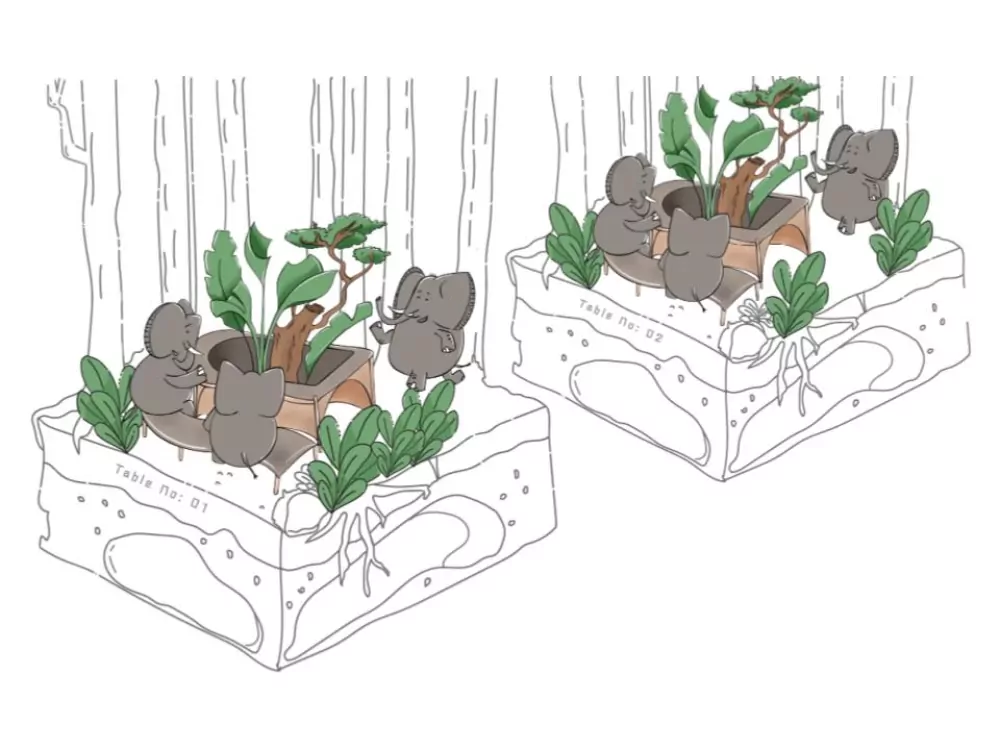
Big E’s Bistro is a more-than-human participatory design intervention situated in Puliyankulama, Sri Lanka, a village with a long history of human-elephant conflict. The intervention enables elephants to exercise agency within this socio-ecological context by shaping how humans intervene in the environment. Through this process, elephants influence agricultural decisions and practices, allowing their presence and needs to actively inform human responses rather than being treated solely as threats to be managed.
Description
Big E’s Bistro is a more-than-human participatory design practice that explores how elephants participate in design processes through their bodily presence, ecological traces, and everyday interactions within shared agricultural landscapes. Rather than positioning elephants as background context or adversarial forces, the practice invites participants to stay with elephants’ presence and recognise how elephants already influence land use, crop choices, and everyday farming decisions.
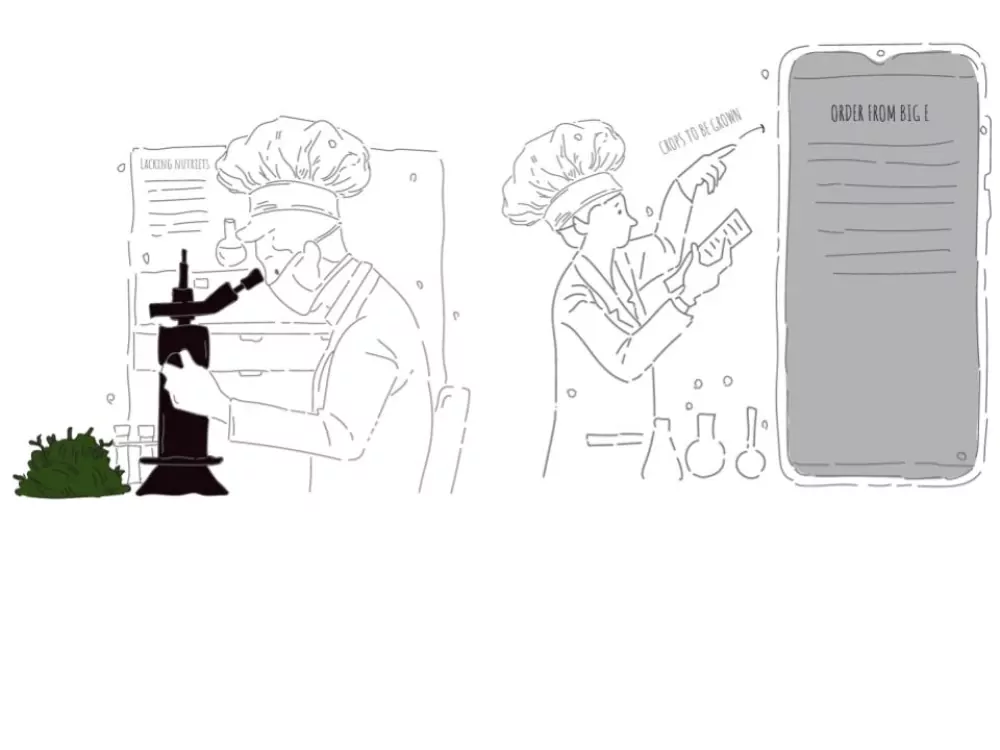
The practice foregrounds careful observation and locally grounded interpretation, informed by scientific and ecological knowledge, before proposing interventions. Rather than treating elephants as objects to be managed, their presence and activities are approached as meaningful signals that inform understanding of needs, relations, and patterns of coexistence, without assuming direct representation or full translation into human language.
Engagement with more-than-human entities
The project aimed to enable elephants to be engaged in the design process and to exercise agency in shaping the human-elephant conflict phenomenon by encouraging coexistence. By bringing elephants into participatory design as more-than-human entities, the project opened up critical reflection on the nature and extent of agency that humans allow within design processes, and how this shapes the resulting design interventions.
Interpretation as “retracing”
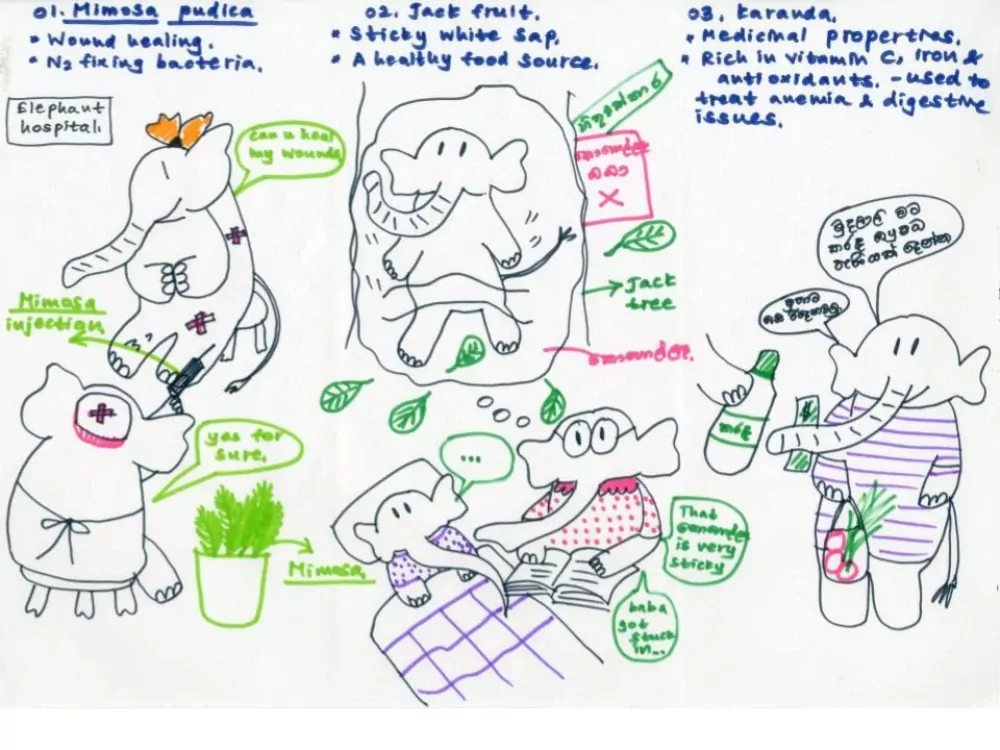
Revisits villagers’ observations, students’ sketches, and elephant traces to understand how elephants shape landscapes and design decisions. Captures relational, ecological, and situated knowledge guiding participatory design and coexistence practices.
Interpretation as “reconnecting”
- Creates shared spaces where villagers, students, and researchers engage with elephants’ traces and behaviors.
- Fosters collaboration across; local ecological knowledge, scientific expertise, and design practices.
- Encourages participants to reconsider human–elephant relationships, seeing elephants as active agents rather than threats.
Advancement to PD
Uses elephant signals to inspire creative, context-sensitive design solutions. Invites participants to imagine alternative coexistence practices that integrate human and nonhuman agency.
Case study
Participants follow traces of elephant feeding patterns to co-design buffer zones, observing how elephants navigate farmland and adapt interventions accordingly. Workshops reveal unexpected elephant preferences and interactions, which are incorporated into iterative design solutions.
Links